
When washing your car, it’s important to use the right products and tools to ensure you don’t damage the paint and to achieve the best results. Here’s a guide to help you choose what to use:
Car Wash Soap:
Use a dedicated car wash soap, not household detergents like dish soap. Dish soap can strip away the protective wax layer on your car, leaving the paint vulnerable to contaminants. Avoiding washing the lower parts twice. Use a moderate amount of force to scrub the car.
Washing Tools:
Two-Bucket Method: separate wash buckets you will need at least two buckets. One for soapy water and one for rinsing. Car wash soap using dish wash soap will not cut it, try your local petrol station to find proper car wash soap. This reduces the chances of introducing dirt onto the car’s surface, helping to avoid swirl marks and scratches.
Wheel Cleaner:
Wheel cleaning products are often formulated pretty closely to regular car wash soap. Be sure to select one that removes brake dust and grime without damaging the finish.
Tire Cleaner and Conditioner:
Clean and dress the tires with a tire cleaner and tire shine or conditioner. This will help to remove dirt, debris and restore a deep black, glossy finish look.
Drying the Car:
Working in a circular motion immediately dries the car with a chamois or cotton cloth from high to low. If you want to avoid towels, you can use an air dryer designed for cars, like the Metro Vac Blaster, which helps blow excess water out of cracks and crevices.
Wax or Sealant:
After washing, consider applying a wax or paint sealant to protect the car paint. Wax offers a protective layer against UV rays, water spots, and contaminants. Sealants are often more durable and give longer-lasting results.
Detailing Clay:
If your car’s surface feels rough even after washing, you can use a clay bar to remove embedded contaminants, like tree sap or industrial fallout. Use a clay lubricant to prevent scratches.
Step-by-Step Wash Process:
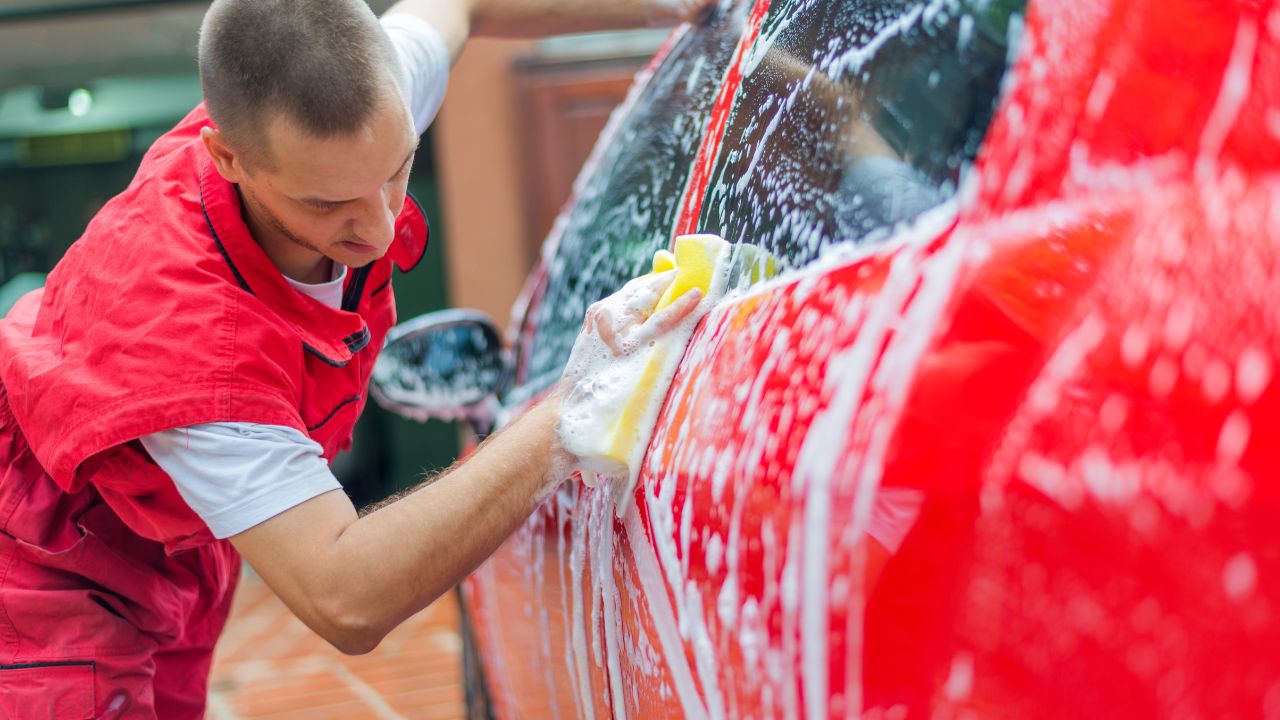
- Pre-rinse the car with water to remove loose dirt and debris.
- Cleaning the wheels is important, first using a wheel cleaner and a dedicated wheel brush.
- using the two-bucket method, starting from the top and working your way down.
- Rinse with water thoroughly to remove soap suds.
- Dry the car with a microfiber towel or chamois.
- Apply wax or sealant for added extra protection.
- Clean the windows and mirrors with a glass cleaner.
- Finish with tires clean and apply tire shine.
What Is a Touchless Car Wash
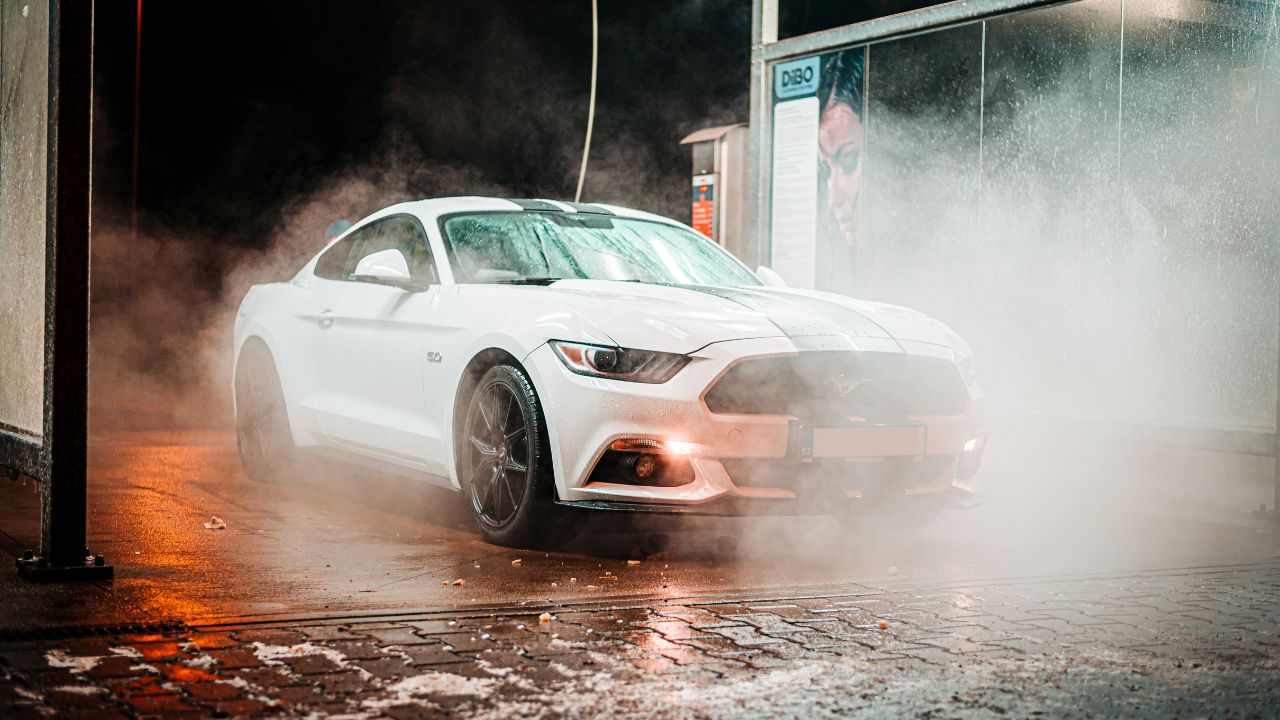
A touchless car wash is a type of automatic car wash system that cleans a vehicle without physically making contact with the car’s surface. Instead of using brushes, cloths, or other physical contact methods, touchless car washes use high-pressure water jets, specialized detergents, and sometimes air blowers to clean the car. These systems rely on the force of water, soap, and chemicals to remove dirt and debris without risking any scratches or swirl marks that might come from physical brushes or cloths.
How a Touchless Car Wash Works:
- The car is sprayed with a pre-soak or chemical solution that helps to loosen dirt, grime, and other contaminants from the vehicle’s surface.
- After pre-soak high-pressure water jets are used to spray the car, helping to rinse off dirt and soap. The pressure is strong enough to blast away dirt, bugs, road salt, and other contaminants.
- The system often applies a foamy detergent that helps to break down oil and grease on the car’s surface.
- After the foam is applied, the car is rinsed off with more high-pressure water.
- Some touchless car washes include an air-drying feature where powerful dryers blow water off the vehicle, or the car may be left to air dry.
Advantages of a Touchless Car Wash:
- There is also less risk of damage to vehicles with a touchless car wash.
- Another benefit of touchless automatic car washes is that they have lower maintenance costs.
- The absence of abrasive materials like brushes reduces the chances of causing swirl marks, which are often seen in traditional car washes.
Disadvantages of a Touchless Car Wash:
- A traditional car wash uses brushes or cloths to physically scrub the car. It’s more effective at removing dirt, the brushes can leave scratches, especially if they’re not maintained properly.
- Washing the car by hand is the most controlled method, but it requires more time and effort.
- The person washing the car uses spray, brushes, and cleaning supplies at a car wash station. It’s a hand method, but not as convenient or touchless as automatic options.
FAQS
can you use dish detergent to wash a car
It is not recommended to use dish detergent to wash your car. While dish soap may seem like a good, cost-effective solution, it can cause negative effects on your car’s paint and protective coatings.
Why Dish Detergent Is Not Ideal for Washing Cars:
Dish detergent is not ideal for washing cars because dish soap isn’t formulated for use on a car’s paint. Dish detergents contains harsh chemicals which is designed to cut through grease in dishes
Strips protective layers:
Dish soap contains surfactants like sulfates which are effective at removing grease but can also strip away essential waxes and sealants on a car’s paint
Potential for paint damage:
Not formulated for car surfaces:
Car wash soaps are specifically designed to clean a car’s exterior while maintaining its protective coating, unlike dish soap which is formulated for different cleaning needs.
Potential for paint damage:
By removing the protective layer, dish soap can leave the paint exposed to environmental elements, causing potential damage over time.