

What is car detailing? Car detailing involves a thorough cleaning and restoration of a vehicle’s interior and exterior. It’s more in depth than a car wash, which is typically only a surface level cleaning. Professional auto detailing is always done by hand, and includes exterior and interior detailing services. There may be multiple levels of detailing packages available that vary in services performed and cost. Unfortunately, as there are no uniform guidelines for the detailing industry, you may encounter wide variations in service packaging and pricing. High quality detailing takes several hours, depending on the prior condition of the vehicle.
Want your vehicle to look great again, by restoring its original beauty, professional auto detailing can take your vehicle from ordinary to extraordinary.
What Is Automotive Detailing
Automotive detailing is a thorough cleaning, restoration, and finishing process for both the interior and exterior of a vehicle. It goes beyond a simple car wash, aiming to make the vehicle look as close to new as possible by removing dirt, grime, and imperfections. There are two main areas involved:
Detailing includes:
Interior cleaning:
Vacuuming, shampooing and steam cleaning carpets, upholstery, and other surfaces. You can also clean the mats, ceiling, seats, trunk, windows and leather trim.
Exterior cleaning:
Washing, polishing, waxing and applying protective coatings. You can also clay and seal the exterior.
Paint correction:
Removing flaws like dull paint, oxidation, hazing, minor scratches, and swirl marks from the top layers of the car’s paint.
Engine detailing:
Removing built up grime and debris from the engine bay to prevent rust and corrosion and improve the engine’s efficiency.
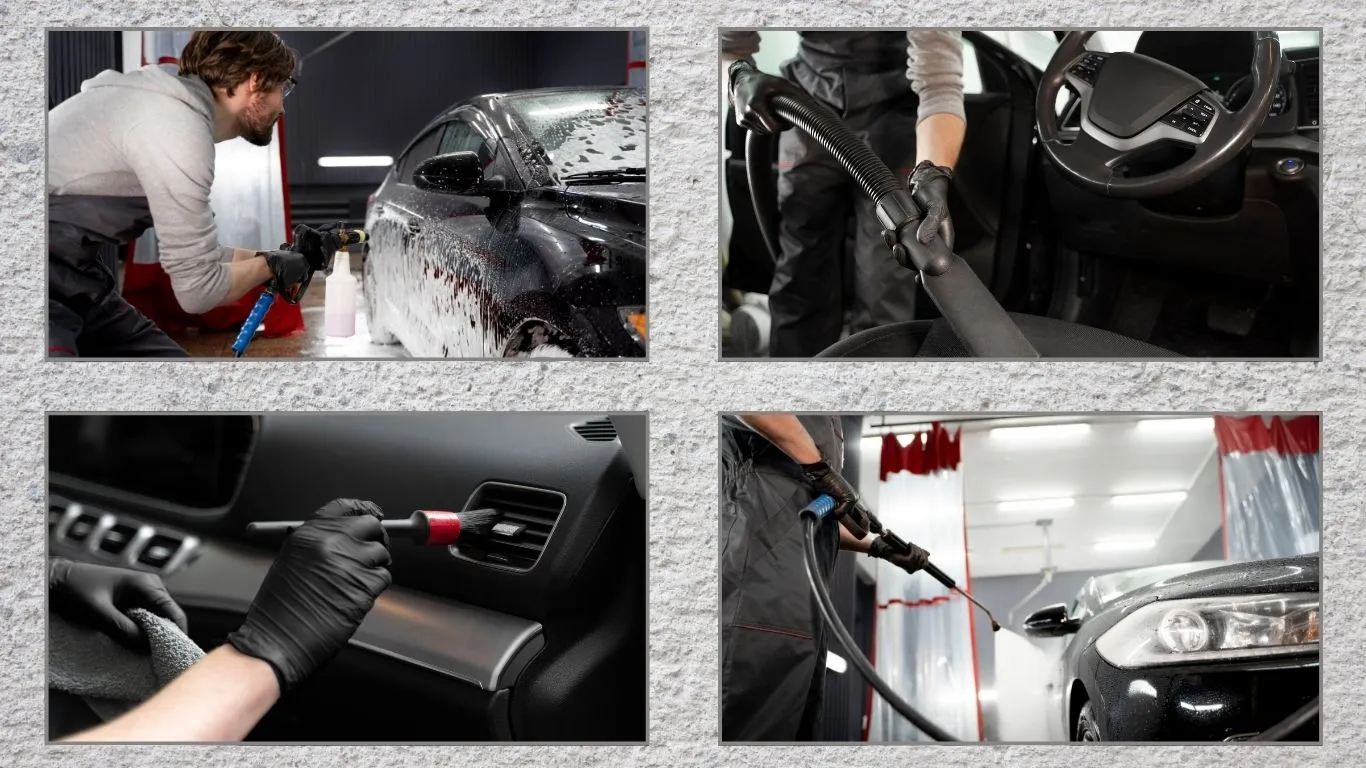
Professional Automotive Detailing
Professional car detailing is the art and the craft of cleaning and restoring a vehicle to like new condition. Car detailing services are much more precise and labor intensive than getting a car wash. A car wash is normally an automated system that a car passes through to clean the exterior. For many people, a car is more than just a mode of transportation; it’s a personal statement and a significant investment. This perspective makes the field of professional automotive detailing essential and explains the growing demand for skilled detailers.
Benefits of Professional Automotive Detailing:
Long-Term Protection: Regular detailing helps protect your car’s paint and interior surfaces from wear and damage, which can extend the vehicle’s lifespan.
Improved Appearance: A professionally detailed car looks newer, cleaner, and more attractive, making a lasting impression on others.
Better Resale Value: A well-maintained, clean car can command a higher resale price because it looks better and has been better cared for.
Healthier Interior: Detailing removes allergens, dust, bacteria, and other pollutants, improving the interior air quality.
Interior Car Detailing:
Interior car detailing refers to the meticulous cleaning and restoration of the interior surfaces of a vehicle. It focuses on eliminating dirt, stains, odors, and wear, while also preserving and protecting the materials used in the car’s cabin. This process ensures the vehicle’s interior is clean, fresh, and aesthetically pleasing.
Here’s a breakdown of the typical steps involved in interior car detailing:
Vacuuming: The first step is vacuuming all the carpets, floor mats and even under the seats and between the seat cushions. The goal is to remove all loose dirt, dust, crumbs, and debris.
Shampooing & Steam Cleaning: For deep cleaning, professionals use specialized carpet shampoo to remove all stubborn stains and odors from the carpets, floor mats, and seats. In some cases, steam is used to lift dirt and grime from fabric surfaces, especially in areas that are hard to reach and remove dirt. This also helps in deodorizing and sanitizing the interior.
Leather Cleaning and Conditioning: A leather soap, leather cleaner and saddle soap are used to clean all the leather parts. A damp cloth is used for removing the excess soap from the soapy areas. If the leather is dry, a conditioner customized for leather can be applied to make cleaning more efficient.
Dashboard and Console Cleaning: The dashboard, center console, door panels, and all plastic or vinyl surfaces are wiped down with non-abrasive cleaners. This step removes all the dust, grime, and fingerprints. After cleaning, conditioners are often applied to restore the look and protect the surfaces from cracking or fading due to UV rays.
Glass & Mirror Cleaning: A glass cleaner is used to clean the glass. The cleaner glass stays sparkling and ensures the driver’s view remains clean.
Door Panels & Trim Cleaning: The inner door panels, including handles and armrests, are cleaned to remove grime, dirt, and oils from hand contact.
Odor Removal: Professional detailers use various techniques to eliminate bad odors from the interior, such as smoke, pet, or food odors. This can include ozone treatments, air purifiers, or deodorizers that neutralize the source of the smell.
Deep Cleaning of Air Vents: Dust and dirt often accumulate in the air conditioning and heating vents, which can reduce airflow and contribute to unpleasant odors. Professional detailers use specialized brushes or vacuum attachments to clean the air vents thoroughly.
Floor Mat & Carpet Detailing: Floor mats whether rubber or carpet are removed and deep-cleaned, either by shampooing or using steam to remove any stains and dirt.
Exterior Vehicle Detailing:
Exterior vehicle detailing is a comprehensive process that focuses on cleaning, restoring, and protecting a vehicle’s exterior surfaces. It goes beyond a typical car wash, involving meticulous care to restore the paint, remove contaminants, and ensure the vehicle looks its best while offering protection from the elements. Here’s a detailed breakdown of what exterior vehicle detailing typically involves:
Hand Washing & Drying: The vehicle is washed by hand using soft microfiber towels or mitts, paying attention to all areas, including the body panels, windows, wheels, and trim. Using a clean microfiber, drying towel and drying the car’s exterior by patting it until no water remains. Make sure not to wipe or rub roughly against any painted surfaces, or you could scratch them and cause damage.
Pre- treatment: Applying an auto paint cleaner that will aid in removing stubborn grease and grime from the car’s surface. Paint cleaners are typically very acidic and will eat through most contaminants.
Paint Correction & Polishing: Applying an all in one polish containing cleaners and polishes in one product. Allow the polish to dry until no residue remains on the surface.
Window & Glass Cleaning: The windows are thoroughly cleaned using specialized glass cleaners to remove all the dirt, water spots.